Showing posts with label family. Show all posts

Friday, March 7, 2014

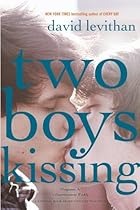
Two Boys Kissing by David Levithan

Two Boys Kissing
When their friend, Tariq, is the victim of a hate crime, Craig and Harry (who used to be a couple) plan to set a new world record for longest kiss. They obtain permission to hold the event in front of their high school and Tariq sets up equipment to live stream. We also meet Peter and Neil who are in a relationship, Avery (a transsexual) and Ryan who are starting a relationship, and Cooper who is lost and feels totally alone. Watching over all of these young people is a host of dead AIDS victims who cheer and encourage them and are frustrated when their advice is not heard.

Of course these young men are not alone. We also meet their family and community members who have their own reactions and concerns for them. Luckily the ones with the bad reactions are in the minority and we see how the event does bring people together and  celebrate love. We also see how Harry supports Craig and helps in reach their goal. We should all be so lucky to have someone like him.

I highly recommend this book to YA readers.

Tuesday, March 26, 2013

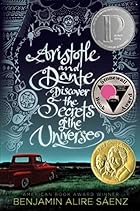
Aristotle and Dante Discover the Secrets of the Universe by Benjamin Alire Saenz

Aristotle and Dante Discover
the Secrets of the Universe
Aristotle (Ari) and Dante meet at a public pool one summer and find they share so much. They are both third generation Mexican-American with college educated parents. They are also learning about their sexuality like so many young people their age. Neither of these journeys is easy but they both have so much to learn.

What is undeniable is the value of one close friend and these two show how important it is to be there when things go wrong. This is where friendship really counts. 

I highly recommend this book as an example of fine character development. We come to really like these two young men and hope that they will be happy.

My rating for this book:

Sunday, March 24, 2013

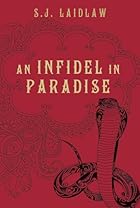
An Infidel in Paradise by S.J. Laidlaw

An Infidel in Paradise
Talking about  grouchy people, Emma has all the reasons in the world to be grouchy. Her mother is a Canadian diplomat and they frequently move but when Emma's father takes up with a Phillipino woman in Manila, her mother takes her older brother, younger sister, and her to a new posting in Islamabad, Pakistan. So not only did she have to leave her friends and move to a much more restrictive culture, but now she has to make new friends and try to get along without a father.

Luckily, the students at her international school are used to kids coming and going and instantly welcome her. Included in these is a drop-dead gorgeous, wealthy Pakistani boy named Mustapha who is in an marriage arrangement with a beautiful girl named Aisha. She has to learn to navigate the treacherous waters of her new home. In addition to new restrictions on her freedom, she has moved to an area of the world with dangerous riots and bombings. As a North American, she is very vulnerable and conspicuous. 

Stupidly and selfishly, Emma leaves her little sister alone one night to attend a party at Mustapha's house. When rioting breaks out Emma risks her life to get back home to her sister. She learns a valuable lesson in family and following rules.

This book is interesting because of the family life as well as the location of the story. Definitely different. 

My rating for this book:

Saturday, March 2, 2013

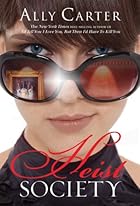
The Heist Society by Ally Carter

The Heist Society
This book is a pleasant little surprise. It is full of jet setting teens with either uber-rich families or art thieving families. What a breath of fresh air!

Katarina Bishop has learned running cons from her family and cons her way into a prestigious boarding school to escape that life. However, she gets kicked out (set up by her 'friend') and she returns to her life to save her father from the mobster, Arturo Taccone. Some pieces of art were stolen from his fortress of a house and he is convinced that Kat's father is the only one who could have done it. If she doesn't return the pieces to their owner, terrible things will happen to her father. Kat does what she has to do.

Which is to call together a group of people which includes her rich buddy, Hale, and others to figure out who did steal them, where are they being stored, and how can they get them back. Question 1 is still a mystery, question 2 is the Henley, an art museum in Paris, and question 3 has to be done in 14 days...or else.

This charming adventure is carried out and Kat even learns that Taccone isn't the rightful owner - the pieces were stolen from their owners by the Nazis and never returned. So this begs the question, should she return them to Taccone?

I highly recommend this intelligent action-filled story.

My rating for this book:


Saturday, February 23, 2013

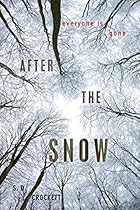
After the Snow by S.D. Crockett

After the Snow
This books takes place in England sometime after the buildup of CO2 has changed the chemical makeup of the oceans so much that the circulating currents have stopped or slowed and England has been in the grip of winter long enough to seriously affect society. Willo is a young man who lives with his family in the hills trapping hares and trading the pelts for other necessities. However, one day he returns home to find that his family had been taken away.

He loads up a sled with items he will need and snowshoes off in pursuit. Along his way he meets a variety of people surviving, successfully or not, in different ways. Naturally, there are many bad people and Willo relies on an inner dog voice to help him maneuver through the dangers he encounters. (Oddly the dog voice seems to be more literate than his own voice - could it be his father's voice?)

Willo eventually learns that his father was not the man he thought he was. But Willo has learned enough about himself and his strength to take his own path. The door is definitely open for a sequel but, yay!, this is a stand alone book.

My rating for this book:   
 

Thursday, January 31, 2013

The Book Thief by Markus Zusak

The Book Thief
Few books are worth the time to reread. Even rarer are those books that are worth rereading and reblogging. This is one such book.


I originally bought this copy at a library book sale for my daughter who had never read it. When she handed it back to me I knew I had to read it again. It is such a gift! It is not just another Holocaust book; it is a book about people surviving, growing, existing, and loving in the worst possible circumstances.

It is one of those books that everyone should give a couple of hours of their lives to read.

Thursday, October 21, 2010

The Age of Innocence (1920)

I read this book by Edith Wharton for several reasons. I had never read anything by her before, it was on the Banned Books List, and I am trying to catch up on many classics that I have not yet read.

It can almost be called historical fiction since she wrote the book in 1920 but it takes place in the 1870s. It is a biting look at high society in New York with all of its strict rules and conventions. Everything is so structured, in fact that the characters find they don't even have to speak to share their thoughts.

Archer Newland is a young man who, in the opening of the book, becomes engaged to Mary Welland, the neice of Mrs. Manson Mingott and cousin to the Countess Ellen Olenska. He encounters her in her family's box at the opera and "communicates" his intention to announce their engagement.

As he entered the box his eyes met Miss Welland's, and he saw that she had instantly understood his motive, though the family dignity which both considered so high a virtue would not permit her to tell him so. The persons of their world lived in an atmosphere of faint implications and pale delicacies, and the fact that he and she understood each other without a word seemed to the young man to bring them nearer than any explanation would have done. Her eyes said: "You see why Mamma brought me," and his answered: "I would not for the world have had you stay away."

Even though Ms Wharton was raised in this society, she is very biting in her descriptions of the people and their daily lives. The introduction of Mrs. Mingott had my jaw drop in disbelief it was so mean.

The immense accretion of flesh which had descended on her in middle life like a flood of lava on a doomed city had changed her from a plump active little woman with a neatly-turned foot and ankle into something as vast and august as a natural phenomenon.

I would have been really bad to be on Ms Wharton's bad side!

On the other hand, I found charm in the characters looking forward to the future, Ms Wharton's present, our past. In this excerpt, Archer has a rendezvous with the Countess in the now famous MOMA.

They had this melancholy retreat to themselves, and seated on the divan enclosing the central steam-radiator, they were staring silently at the glass cabinets mounted in ebonised wood which contained the recovered fragments of Ilium.
"It's odd," Madame Olenska said, "I never came here before."
"Ah, well --. Some day, I suppose, it will be a great Museum."
"Yes," she assented absently.

I highly recommend this book to everyone. Don't wait to read it like I did. Now that you have heard about it, don't delay.

My recommendation for this book: +++++
Mockingjay (2010)

This book is the third and last installment of the series by Suzanne Collins which started with the fantastic "Hunger Games". The violence in this dystopia fantasy was quite disturbing particularly since so much of it was teen on teen. In this last book, the rebellion is in full swing and everyone is involved, whole districts are being fire-bombed and the most dastardly traps are around every corner. Katniss, has been elevated as the face of the rebellion, Mockingjay, named after a pin she wore, given to her by her mother.

What they want is for me to truly take on the role they designed for me. The symbol of the revolution. The Mockingjay. It isn't enough, what I've done in the past, defying the Capitol in the Games, providing a rallying point. I must now become the actual leader, the face, the voice, the embodiment of the revolution. Ther person who the districts -- most of which are now openly at war with the Capitol -- can count on to blaze the path to victory. I won't have to do it alone. They have a whole team of people to make me over, dress me, write my speeches, orchestrate my appearances -- as if that doesn't sound horribly familiar -- and all I have to do is play my part. Sometimes I listen to them annd sometimes I just watch the perfect line of Coin's hair and try to decide if it's a wig. Eventually, I leave the room because my head starts to ache or it's time to eat or if I don't get aboveground I might start screaming. I don't bother to say anything. I simply get up and walk out.

I probably should have read the three books together because I found Katniss' character positively grating. I wasn't the only one. Even the other characters in the book seem to have a problem with her. One of the times she is recovering from wounds, she talks with Johanna.

". . . How about you, Mockingjay? You feel totally safe?"
"Oh, yeah. Right up until I got shot," I say.
"Please. That bullet never even touched you. Cinna saw to that," she says.
I think of the layers of protective armor in my Mockingjay outfit. But the pain came from somewhere. "Broken ribs?"
"Not even. Bruised pretty good. The impact ruptured your spleen. They couldn't repair it." She gives a dismissive wave of her hand. "don't worry, you don't need one. And if you did, they'd find you one, wouldn't they? It's everybody's job to keep you alive."
"Is that why you hate me?" I ask.
"Partly, she admits. "Jealousy is certainly involved. I also think you're a little hard to swallow. With your tacky romantic drama and your defend-of-the-helpless act. Only it isn't an act, which makes you more unbearable. please feel free to take this personally."

Another aspect of this book that bothered me was the use of drugs. It seems that every time Kat got agitated, like after seeing Peeta speaking for the Capitol on TV, someone was there with a syringe to sedate her. Also, it seems she was receiving a lot of pain medication for her many wounds.

I will have to give this series another shot, some day, and read them together. I may have more sympathy for Kat then.

This series is very imaginative and violent, but very readable. I suggest the reader tackle all three in a row.

My rating for this book: +++ 1/2

Wednesday, October 13, 2010

Blank Confession (2010)

I have been enjoying Pete Hautman's books since I read his National Book Award winning book, Godless, and I was thrilled when we received this book yesterday. Short and fast, it tells the story of Mike and his sister, Marie who was dating a drug dealer named Jon, and a police detective named Rawls. The story reminded me of the old TV series, The Lone Ranger, where a mysterious masked man would ride into town, avenge the innocent victim, and ride away before anyone could thank him.

Our story opens with a young man named Shayne showing up at a police station to confess to a murder he committed.

He had seen that expression in other places too. The morgue. Funeral parlors. Murder scenes.
The face of the dead.
But this boy was not dead. Somewhere behind those eyes existed a spark -- a spark that had brought him here, to this building, to this bench, to George Rawls.
"Are you Shayne?" Rawls asked.
The boy dropped his chin. Rawls took that as a yes and sat beside him on the bench, feeling every last one of his forty-three years, fifteen of them as a cop. Despite having conducted hundreds of such interviews, he found himself at a loss. Something about his kid -- who could not have weighed much more than his Labrador retriever -- frightened him. Not fear for himself. The other kind of fear: fear that the universe no longer made sense, that everthing was about to change.
"So . . . ." Rawls cleared his throat, looking straight ahead, ". . . who did you kill?"

The chapters alternate between Shayne giving his statement to Rawls, and flashbacks of the events from Mike's point of view. Jon shoved a bag into Mike's backpack when police showed up at the school with dogs to perform locker searches. Fearing that he might be caught with drugs, Mike threw the bag into the garbage. The next day Jon demanded his bag back and since the garbage had been emptied, he told Mike to repay him $500 or suffer the consequences. Unable to pay and afraid more for what Jon would do to his sister than himself, Mike is in a real quandry. In rides Shayne on his white horse, er, BMW motorcycle, to save the day.

"Hi, ho, Silver. Away!!!"

This book didn't take much longer to read than watching an episode of the Lone Ranger. The reader is swept along by events fearing the worst would result in this situation. I highly recommend this book to anyone.

My rating for this book: ++++

Sunday, October 10, 2010

The Story of Edgar Sawtelle (2008)

David Wroblewski has written this retelling of Hamlet in a setting of a small dog breeding farm in Winsconsin starring the only son of Gar and Trudy Sawtelle, Edgar, who was born perfect in every way except that he was totally mute. Gar dies, apparently of a heart attack, and his brother, Claude, helps to fill in for the father, both in the business, and in Trudy's life. Understandedly, this does not please Edgar. Like Hamlet, Edgar plans a way to let his uncle know that he is under suspicion for Gar's death.

First, tell them the dogs see everything that happens here, he signed.
What?
Just say it. Say they see everything and they never forget. You'll understand in a minute.
He stood and waited. He thought his mother might ignore his request, but she turned to Mr. Benson and Claude and Doctor Papineau. "Edgar says to tell you that the dogs see" -- she faltered for a moment, then continued -- "That they see everything that happens here, and they never forget."
Edgar was standing before the dogs, looking down the line to make sure they didn't break. He touched Opal under the chin. She looked at him. He released her and she dashed down the aisle to the four of them standing by the workshop. Then he pulled one of the syringes from his shirt pocket. His hand was shaking and as the syringe came out, it snagged another which went clattering to the floor. He snatched it up and placed it in Baboo's mouth.
Tag, he signed. Then he turned to watch.
Baboo trotted down the aisle with the syringe in his mouth. Edgar kept his eyes on Claude, who had caught sight of the syringe. When Baboo reached them, he pressed his nose into Opal's hip, and Opal looked toward Edgar. He gave a small gesture with his right hand. She dropped to the floor and lay on her side.
. . .
Claude stood watching it all. He glanced at the open door, then back at the dogs, then at Edgar.


I have to admit I liked this book in spite of myself. It's not the sort I usually read but I found that frequently I would pick it up and lose a lot of time as I followed Edgar and his dogs through this tragedy. I learned about the Hamlet connection towards the middle of my reading and it added another level to the story, trying to remember Hamlet's story. It would be enjoyed by dog lover's for their major parts in the story.

My recommendation for this book: +++

Wednesday, September 22, 2010

Things Fall Apart (1959)

It's almost Banned Book Week so I picked up this book by Chinua Achebe which was on the ALA list of classics that have been challenged and/or banned. I admit I knew nothing about the book or the author when I chose it. It's a story about a man named Okonkwo in a village somewhere in Africa (Nigeria?) called Umuofia. A simple life, we are shown how they observe celebrations such as marriage, grieve for the dead, and respect the gods that provide them with food. Many events over generations have given rise to their system of justice which is strictly observed by all members of the village. For instance Okonkwo is banished from his village for a period of seven years because his rifle exploded and accidentally killed the son of his friend, Obierika.

Obierika was a man who thought about things. When the will of the goddess had been done, he sat down in his obi and mourned his friend's calamity. Why should a man suffer so grievously for an offense he had committed inadvertently? But although he thought for a long time he found no answer. He was merely led into greater complexities. He remembered his wife's twin children, who he had thrown away. What crime had they committed? The Earth had decreed that they were an offense on the land and must be destroyed. And if the clan did not exact punishment for an offense against the great goddess, her wrath was loosed on all the land and not just on the offender. As the elders said, if one finger brought oil it soiled the others.

Unfortunately, as it has often happened in the history of our world, someone (white Christians in this case) comes along to civilize an already civilized people because they know better and in the process pride and self-respect is destroyed.

Why, he cried in his heart, should he, Okonkwo, of all people, be cursed with such a son? He saw clearly in it the finger of his personal god or chi. For how else could he explain his great misfortune and exile and now his despicable son's behavior? Now that he had time to think of it, his son's crime stood out in its stark enormity. To abandon the gods of one's father and go about with a lot of effeminate men clucking like old hens was the very depth of abomination. Suppose when he died all his male children decided to follow Nwoye's steps and abandon their ancestors? Okonkwo felt a cold shudder run through him at the terrible prospect, like the prospect of annihilation. He saw himself and his fathers crowding round their ancestral shrine waiting in vain for worship and sacrifice and finding nothing but ashes of bygone days, and his children the while praying to the white man's god. If such a thing were ever to happen, he, okonkwo, would wipe them off the face of the earth.

The end of the story is no surprise, it is just another tragic ending of imperial interference. I can well imagine that some Christians would be offended by the depiction of the missionaries and might challenge this book in some libraries.

This book begs to be read slowly. There is very little description, just bare action, so things can easily be missed if read too fast. It is a short book and well worth the time to read it.

My rating for this book: +++++
Saturday, September 18, 2010

Dexter is Delicious (2010)

Another fabulous episode of life with Dexter by Jeff Lindsay. The blessed event has arrived and Dexter is now a daddy. This should be just the thing to banish the Dark Passenger and polish the new world that Dexter has created for himself with a house, wife, and children. Out of nowhere, his brother returns, seemingly sincere to be a part of this family. Can he be trusted? And will the bad guys stop doing bad things and distracting Dexter? We want Dexter to be able to enjoy his family but on the other hand, would he be as interesting a character?

I stood up. I just needed to move around, try to calm down, collect my thoughts, tame these weird and wild and brand-new emotions, before they carried me away on a flood tide of stupidity. I walked into the kitchen, where the dishwasher was already whirring away at the dinner dishes. Past the refrigerator, its ice-maker clicking. I walked into the back hall by the washer and dryer. All around me, through the whole house, everything was clean and functional, all the machinery of domestic bliss, in its place and ready to do exactly what it was supposed to do - all of it but me. I was not made to fit under the counter of this or any other house. I was made for moonlight gleaming off a very sharp knife and the soothing ratchet of duct tape purring off the roll and the muffled horror of the wicked in their neat and careful bods as they met their unmaker -

I doubt I would spoil the story by saying that Dexter decides he must keep the world safe for his Lily Ann. Yay!

My rating for this book: ++++

Sunday, August 29, 2010

The Lark's Lament (2007)

Taking place in the early 13th century, this book by Alan Gordon takes us into the world of jesters (fools) who were organized into an organization known as the Fools Guild. In this series of mysteries we meet a traveling family of jesters. They are visiting a monk who is a retired member of the guild when a brutal murder of another monk takes place and a line from a song is written on the wall using his blood.

Theo and Claudia travel with their infant daughter, Portia, and young apprentice, Helga. Along the way they entertain with puppet plays, skits, and songs. They go around France following clues about who wrote the song and why.

"Let me get this straight," said Grelho when he returned from escorting my wife and apprentice. "You have traveled a hundred miles to track down an obscure song that may contain an obscure reference to an obscure someone who is probably dead because an obscure someone else killed another obscurity so he could splash some blood on some books."
"Yes," I said. "Although when you put it like that, it seems like a waste of time."

I really enjoyed this book. There are so many series of mysteries that take place in new venues, times, countries which give the readers a glimpse into a new world and this one is definitely a new world for me. I will definitely be looking for back episodes of this series.

My rating for this book: +++ 1/2

Sunday, July 18, 2010

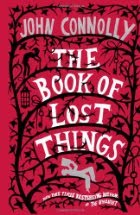
The Book of Lost Things (2006)

This is a delightfully different book by John Connolly which reintroduces us to many of our favorite fairy tales in a story about a Narnia-style link to another world.

David is twelve years old and lives in London during World War I. His mother succumbs to cancer even after all of the twelve-year old things he can do to keep her alive. In short order his father remarries and David finds himself with a baby brother. One night a German airplane crashes in their backyard and David finds a hole in the garden wall that leads to another world. He meets many new people, many familiar from our childhood fairy tales, in his quest to meet the king and find his way back to London, including a sinister character called the Crooked Man.

By bringing all these characters together, Connolly has given us a new fairy tale. It has all the requisite parts - the "abandoned" boy, the evil stepmother, helpers along the way, evil at every turn. David takes all of the events in stride and rises to the occasion at the end and lives happily ever after, sort of.

There is an additional 120 pages at the end of the story where Connolly gives us versions of the fairy tales he incorporates in the book and their backgrounds. I found this extra stuff very informative and fun, especially since I haven't read fairy tales in many, many years. Connolly says,

One of the themes of The Book of Lost Things is the way in which stories and books feed into one another, in much the same way that I, as a writer, have been influenced by the books that I have read. In that sense, The Book of Lost Things is a narrative constructed not only from the books David has encountered, but also from the books and stories that have influenced me.

I wonder what books have influenced me.

My rating for this book: ++++

Thursday, July 8, 2010

The Ape Who Guards the Balance (1998)

This is the tenth book in the Amelia Peabody series by Elizabeth Peters about a family of archaeologists at the turn of the 20th century. Amelia is the matriarch, Professor Emerson is her husband, Ramses is her son, Nefret her niece, and David, an Egyptian who is as close to Ramses as any brother could be. As I read this book I thought that all of them were always aware of each others' location and occupation like our body is aware of the location and occupation of each of its parts. The point of view alternates between Amelia's and "Manuscript H" which lets us see what is going on with the family members when she is not there to observe.

There was no warning, not even a knock. The door flew open, and he forgot his present aches and pains in anticipation of what lay in store. The figure that stood in the door was not that of an enemy. It was worse. It was his mother.

They are all very proper and very British in their actions and interactions with others. The Professor is given permission to dig in a location that does not hold any promise and he must use all of his best control to not interfere with another archeologist's more exciting dig especially since he knows that the other dig will not be correctly recorded in the rush to unearth new riches. They are all on guard for a master criminal known as Sethos who, despite his six foot height, is also a master of disguise. There is another villain, Bertha, who takes advantage of Amelia's crusade to educate Egyptian girls to better their circumstances.

I really wanted to like this book. I think I would have enjoyed it more if I started with the beginning of this series. After all, it has an undeniably intriguing mix of mystery and Egyptology. I think I will try to find the earlier adventures to see if I like the series better.

My rating for this book: +++

Sunday, June 13, 2010

Little Bee (2008)

This short but powerful book by Chris Cleave is about two women, one middle-aged, one young; one white, one black; one educated, one self-educated; one English, one Nigerian; one free, the other not. The chapters alternate between the two of them as their stories converge, separate, and converge again.

It is a short enough book that giving facts about the plot would give up too much of it. Here is an excerpt from the book:

Three weeks and five thousand miles on a tea ship - maybe if you scratched me you would still find that my skin smells of it. When they put me in the immigration detention center, they gave me a brown blanket and a white plastic cup of tea. And when I tasted it, all I wanted to do was to get back into the boat and go home again, to my country. Tea is the taste of my land: it is bitter and warm, strong, and sharp with memory. It tastes of longing. It tastes of the distance between where you are and where you come from. Also it vanishes - the taste of it vanishes from your tongue while your lips are still hot from the cup. It desappears, like plantations stretching up into the mist. I have heard that your country drinks more tea than any other. How sad that must make you - like children who long for absent mothers. I am sorry.

Two cultures come together and try to help each other as they are able, not enough for either in the end. I highly recommend this book.

My rating for this book: ++++

Monday, April 19, 2010

Revolver (2009)

This is a marvelous historical fiction story by Marcus Sedgwick. It have me the uncomfortable, krizzly feeling in my stomach when reading about mean, awful adults bullying kids, the icky, shivering feeling when reading about the brutal cold of the polar regions, and the uneasy, creepy dread when it becomes apparent that a kid has to use violence to defend himself.

Does God turn his eyes away when bad things happen? Or does he watch, wondering at how his creation unfolds? Does he shake his head in sorrow? Or does he smile?

A miner named Wolff suspects Sig and Anna's father has a stash of gold and he wants half or he will reveal the theft. Sig and Anna have no idea what he is talking about and are dealing with the fact that their father just died after falling through river ice. Will the lessons they learned from their parents carry them through this dangerous time?
I highly recommend this book to readers of action books and historical fiction.

My rating for this book: ++++

Sunday, April 18, 2010

Forget Sorrow: An Ancestral Tale (2010)

An autobiographical graphic novel by Belle Yang, this book reminded me of the books by Pearl S. Buck which also took place in China.

Xuan (translated to Forget Sorrow) is the only daughter of Chinese immigrants. As a typical teenager she was embarrassed by their old world ways and accented English. She had the bad fortune of falling in with an abusive man and went to China to study traditional art, travel, and meet her grandparents. She returned to the U.S. right after the massacre at Tiananmen Square. In order to fix her relationship with her father, she listens to stories of his family.
I love Baba's stories. I want to be able to give voice to people who were forgotten.
Rotten Egg silenced me with his fist when I disagreed. The Chinese government silenced its citizens with tanks. I have a voice in America. I won't waste it.
Rotten Egg has reduced my world to these four walls, but I won't let him waste my life.
I'm going to work with Baba until I put in the last period...and send it out into the world.
Xuan's great-grandfather, his four sons, and the rest of the extended family lived in an enclosure in Manchuria off of the rent of tenant farmers. The story follows them through invasions, famines, revolutions, and intense family politics.

I highly recommend this book to readers who are interested in life in 20th century China.

My rating for this book: ++++

The Weed that Strings the Hangman's Bag (2010)

This is the second book in the series by Alan Bradley about the highly intelligent 11-year old Flavia deLuce. She continues to follow her passion for chemistry and poisons and befriends a puppeteer and his assistant after their van breaks down in her town of Bishop's Lacey. While their van is being repaired, they camp out on the grounds of a neighboring farm and promise to put on two shows for the residents of the town. At the end of the second show, the puppeteer is electrocuted. Flavia uses her unique knowledge to help the local constabulary find the guilty party. She is able to flit about the village and learn stuff because few take her seriously.
"You are unreliable, Flavia," he said. "Utterly unreliable."
Of course I was! It was one of the things I loved most about myself.
Eleven-year-olds are supposed to unreliable. We're past the age of being poppets: the age where people bend over and poke us in the tum with their fingers and make idiotic noises that sound like "boof-boof" -- just the thought of which is enough to make me bring up my Bovril. And yet we're still not at the age where anyone ever mistakes us for a grown-up. The fact is, we're invisible - except when we choose not to be.
They are starting to take notice of her, however.
"Dammit!" Inspector Hewitt shouted, leaping to his feet. "Sorry, Vicar. But why haven't we found these things out, Sergeant?"
He glared from one of his men to the other, including both in his exasperation.
"With respect, sir," Sergeant Woolmer ventured, "it could be because we're not Miss de Luce."
Now the long wait for the third book in the series.

My rating for this book: ++++

Thursday, April 1, 2010

When You Reach Me (2009)

Rebecca Stead's book received the 2010 Newbery Award and is quite different from winners of past years. Miranda is a 12-year old girl who lives in Manhattan with her single mother in the 70s. She has the intelligence and common sense that most latchkey kids get with the responsibility and freedom of getting around a big city on one's own. She is given a copy of Madeleine L'Engle's A Wrinkle in Time, and she ponders the complications and contradictions of time travel. In the meantime she deals with the typical sixth grade stuff like stuffy friends, bullies, homeless guys, and not so typical stuff like finding notes referring to events that have not yet happened.

On the Friday after Thanksgiving there was no school, but Mom still had to go to work. I'd been trying hard not to think about them, but I spent a good chunk of that morning worrying about your notes. I held one in each hand and read them over and over. The part about writing a letter wasn't too scary. The scary parts were "I'm coming to save your friend's life" and "Oh, by the way, where do you keep your keys?" and "P.S. Don't ever tell anyone about any of this." Seeing my name written out on the second note was also pretty creepy, because I was still trying to pretend the notes weren't really meant for me. And also where you wrote "I won't be myself when I reach you." I didn't like that part at all.

But of course, we the readers are looking at all of the characters trying to figure who it was that came back in time and which kid was the one to come back. It was refreshing to read a book about a young city dweller that wasn't involved in drugs and gangs but maneuvered around city life with confidence.

My rating for this book: ++++